


Cinema Spotlight: Seaford Community Cinema
- Fraser Simpson

- Jan 2, 2024
- 4 min read
Updated: May 19, 2025
The trials, tribulations and success stories of community cinema
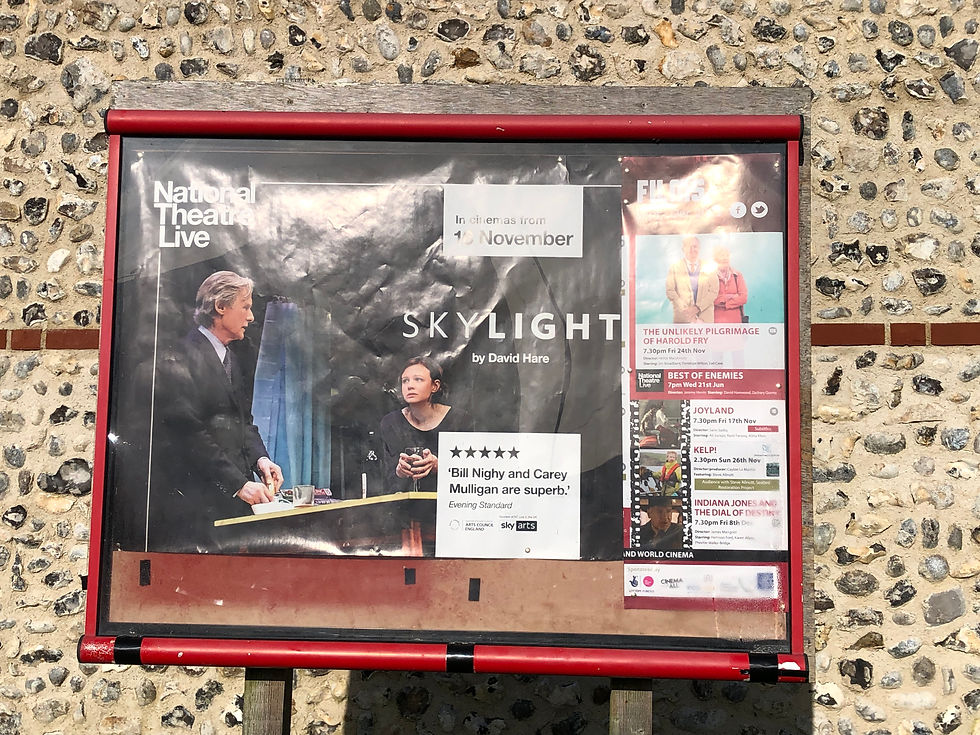
To the average cinemagoer, a cinema might not seem that complicated a business, merely there to show films of varying degrees of quality. Behind every cinema, both multiplexes and independent ones, there is a need to ensure that they break even with their showings, that license agreements can be met, and that their audience is consistent in attendance. That would be a challenge for any independent cinema, let alone a non-profit one that doesn’t even own its premises.
In comparison to other cinemas in East Sussex, ranging from the Depot in Lewes to the Picturehouses in Brighton, the Seaford Community Cinema (SCC) is unique, aside from being the only cinema in Seaford. It doesn’t own its premises, having to rent out screenings in the Barn Theatre from a musical theatre group called Seaford Musical Theatre, who themselves put on plays, musicals, and shows at the venue. Its demographic is older, reflective of Seaford’s population demographics. The films that it shows tend to be films that have already finished their theatrical run months prior. Yet, it all works.

Paula Ross is the chair and presiding officer at the cinema, part of a six-person committee that oversees the cinema, which has been screening films since 2011. When it comes to how film screenings are determined, Paula said, “We all look at what’s available, and what we want to show, someone looks into the licensing implications to see whether the license is available, and we put together a programme based on that. We ask for 10 slots a season normally, and we negotiate available dates, and we put the programme out for publicity. We run three seasons a year, in line with school terms, and we can’t do it too far ahead because of licensing, but we have to do it far enough ahead to make sure that we get the licenses.”
The general rule for Paula and her fellow committee members is for at least one member of the committee to have seen the film they wish, so that, in Paula’s words, “we have to know what we’re putting out there. We try to do as many blockbusters as we can, because that gets bums on seats.”.
Despite the committee’s existence, the cinema is entirely run by volunteers, compared to the full-time staff members present at other cinemas across the country, yet that doesn’t diminish things. Paula continues to explain that: “We are extremely fortunate that we have a fantastic team of volunteers. I’ve been on various committees throughout my life, and this is the nicest group of people I’ve worked with. There’s not one person you wouldn’t want to go out for a drink with.”
The impact of COVID-19 was felt in all parts of life. A report published in 2021 by the Independent Cinema Office revealed that 47% of responding independent cinemas were operating at a loss and were unsure when they would return to profit. For the SCC, it was easier to recover than other places, due to not owning the premises and most staff being volunteers. Whilst they couldn’t function and lacked any form of revenue, there were no outgoings.
Paula recalls how: “It was very slow to start up after COVID-19. We’re a non-profit making organisation, so we only need to make enough money to pay our rent and pay our licenses. However, because it’s still an ageing population, they were very worried about coming back to cinemas. It took probably around a year to get back to where we were before COVID-19.”
With the single screen available at the SCC, compared to the many more available at multiplexes, the numbers required to break even are smaller, but not always achievable. Paula describes that: “We can seat 125 people and our overheads are approximately £150 rent, £100-150 license fees, and we allow £50 for general overheads to cover insurance, publicity, and other things. Therefore, we need to make approximately £300 per showing to break even.”
Lastly, whilst many independent cinemas simply aspire to stay afloat financially and keep continuing their business, the dreams differ for a cinema that can’t own its premises outright. Paula explains how “Ideally, if one of us won the lottery, we would like our own premises, not that we don’t like our premises, we just can’t have full say of what we can do.”
“Most of us are retired, and we’d like to have more time to watch films so that we know what we can show. I took early retirement, and I thought I needed to do something with my life, meet people and get out there. I saw an advert for volunteering at the cinema and ended up running the thing. We’re all doing it for fun, we don’t have targets to meet, and we’re not trying to get one over each other. A group of mad people who want to show a film.”

Comments